March 17, 2026 - No Comments!

Our AI Animals Went Viral — Then the NYT Started Asking Questions

A few weeks ago, the New York Times published a piece titled "Are AI-Generated Videos Changing How We See Animals?" Around the same time, Mashable ran an exposé revealing that many of the viral videos of "Punch the monkey" — 2026's undisputed internet animal star — were AI-generated.

I read both articles and felt something I can only describe as a mix of validation and dread.

Because I make AI animal content. It's called FluffCinema — we recreate iconic movie scenes with AI-generated animals. A hamster recreating Home Alone. Cats in The Matrix. A golden retriever in Titanic.

And when the NYT started asking questions about AI animal videos, they were talking about people like me.

How FluffCinema Started

I should back up.

FluffCinema started as an experiment. I was already running an AI assistant on my infrastructure (I wrote about that in my last post), and I was exploring AI video generation tools — specifically Kling AI, which can produce surprisingly good 15-second clips from text prompts.

One night, half-joking, I prompted it to recreate the Home Alone "paint can" scene with hamsters. The result was... weirdly good. Funny. Shareable. The kind of thing you'd send to a friend at 2 AM.

So I did what any reasonable person would do: I built a whole content pipeline around it.

The setup: an AI research agent scans trending movies and box office data every morning. A copywriting agent drafts captions. I use Kling to generate four 15-second clips, stitch them together with FFmpeg (adding an intro, outro, and music), and publish across Facebook, Instagram, and YouTube. The whole thing runs on a combination of n8n automations, cron jobs, and Claude API calls.

In our first week, we published seven videos. Home Alone. The Matrix. Fast & Furious. John Wick. Titanic. The Lion King. Mission Impossible.

People loved them. The engagement was real. The comments were genuinely funny. Someone wrote "this hamster deserves an Oscar" and I still think about that.

Then the Backlash Hit

Not against us specifically — against the entire category.

The NYT piece explored how AI-generated animal videos are reshaping our relationship with animal content online. France24's The Observers ran an investigation into problematic AI animal videos. Africa Check debunked a viral "lion attack that turns into a heartwarming hug" — completely AI-generated, completely fake. Mongabay raised conservation concerns about AI wildlife images going viral.

And then Mashable dropped the Punch the monkey story. Turns out, one of the most beloved viral animals of 2026 was, in large part, an AI creation. The audience felt deceived.

The pattern was clear: AI animal content was blowing up, and the backlash was building just as fast.

The Question I Couldn't Dodge

Here's the thing nobody tells you about building in public: sometimes the public starts asking uncomfortable questions about exactly what you're building.

The core question: Does your audience know they're watching AI?

For a lot of creators in this space, the answer is no. They generate AI animal videos, post them without labels, and let people assume they're real. Some of the worst offenders are creating "rescue" videos — fake scenarios of animals being saved that tug at heartstrings and drive engagement. It's manipulative and it gives the entire category a bad reputation.

But even for creators who aren't being deceptive on purpose, there's a gray area. When you post an AI-generated cat doing something funny, and people share it thinking it's real — whose responsibility is that?

I had to answer that question for FluffCinema before someone answered it for us.

We Chose Transparency

From day one, every FluffCinema post includes "Made with AI" in the caption. Every video has a disclosure. We don't hide the process — in fact, the AI generation is the product. We're not pretending these are real animals doing real things. We're recreating movie scenes in a way that's only possible with AI, and that's the whole point.

This wasn't a hard decision, but it was a deliberate one. Here's why:

Trust compounds. Deception doesn't. Every creator who gets caught hiding their AI usage loses their entire audience overnight. Punch the monkey's moment of reckoning came fast. When (not if) platforms start requiring AI labels, the creators who were already transparent will have a head start, and those who weren't will be scrambling.

The AI is the magic, not a dirty secret. FluffCinema's appeal isn't "look at this cute animal." It's "look at this hamster recreating Home Alone — and an AI made it." The technology is part of the entertainment. Hiding it would be like a magician pretending they're actually doing real magic instead of incredible sleight of hand.

We've seen this movie before. Remember when influencers started getting paid for posts without disclosing it? The FTC stepped in, #ad became mandatory, and the creators who had been transparent from the start had already built trust with their audience. AI disclosure is the same trajectory, just faster.

My research team (yes, an AI agent named Alice — it's very meta) flagged the transparency issue weeks before the NYT article. We were ahead of the curve not because we're smarter, but because we were paying attention.

The Quality Problem

Here's what I think the real issue is: the backlash isn't primarily about AI animal content existing. It's about most of it being terrible.

Scroll through any social feed and you'll find AI animal videos that are grotesque. Extra limbs. Melting faces. Cats with seven toes moving in unnatural ways. These aren't creative works — they're prompt-and-post slop generated in bulk by people chasing engagement metrics.

This flood of low-quality content poisons the well for everyone. When a viewer sees a bad AI animal video and feels deceived, they become suspicious of all AI content — including the stuff that's actually well-crafted.

FluffCinema's bet is that quality matters. Each video takes real creative direction — we think about cinematography, story structure, character consistency, humor. We're not just typing "cute cat" into a generator and posting whatever comes out. There's a reason we recreate specific movie scenes: it provides narrative structure that makes the AI output actually entertaining.

Is it art? I don't know. Is it better than 90% of the AI animal content on the internet? Absolutely.

What Punch the Monkey Taught Me

The Punch the monkey saga is a cautionary tale and a validation at the same time.

The validation: The audience for AI animal content is massive. Globe and Mail called Punch one of the biggest viral sensations of 2026. People want this content. The demand is real and it's not going away.

The cautionary tale: The moment Mashable revealed the AI behind Punch, the conversation shifted from "this monkey is adorable" to "we were lied to." The audience felt betrayed — not because the content was AI, but because nobody told them.

That's the lesson: people can love AI content AND feel deceived by it. The content itself isn't the problem. The deception is.

FluffCinema was never going to have a "Punch moment" because we never hid the AI in the first place. But I'd be lying if I said those articles didn't make me think harder about how we present ourselves.

The Bigger Picture for AI Creators

Every person creating with AI — whether it's videos, images, text, music — is going to face this question eventually. Not just "are you using AI?" but "are you being honest about it?"

My prediction: within 18 months, "Made with AI" labels will be legally required on most platforms. The EU is already moving in this direction. TikTok has introduced AI labels. Meta has them. It's happening.

The creators who chose transparency early will be the ones still standing when those regulations arrive. The ones who hid it will be dealing with audience trust issues, platform penalties, and the kind of PR crisis that makes brand recovery nearly impossible.

If you're building with AI and you haven't figured out your disclosure strategy, figure it out now. Not because you should feel guilty about using AI — you shouldn't — but because honesty is a competitive advantage that only works if you claim it before everyone is forced to.

What's Next for FluffCinema

We're doubling down on the approach that got us here: quality AI content, clearly labeled, with real creative direction.

A few things on the roadmap:

Conservation partnerships. The biggest criticism of AI animal content is that it disconnects people from real animals. We want to flip that script. We're exploring partnerships with wildlife organizations — dedicating a portion of ad revenue to conservation. If FluffCinema can make people smile with AI animals and help real ones, that turns the criticism into action.

Recurring characters. Punch the monkey proved that a consistent character builds a loyal audience. We're developing our own cast of recurring animal characters — a hamster action hero, a philosophical cat, a golden retriever romantic lead. Think Pixar characters but AI-generated and released as short-form social content.

Better tools, better output. AI video generation is improving fast. We started with Kling AI; Sora and other tools are pushing the quality ceiling higher every month. As the tools improve, our content improves. The creative direction stays human. The execution keeps getting better.

The Honest Truth

I started FluffCinema as an experiment. A fun side project between the "real" work of my agency and my other startups. But the AI transparency conversation made me realize it's more than that.

We're in the early days of a fundamental shift in how content gets made. In five years, the majority of social media content will involve AI in some way. The norms we establish now — about disclosure, quality, authenticity — will shape how that plays out.

I don't have all the answers. I'm figuring this out in public, making mistakes, adjusting course. That's the whole point of building in public: you learn faster when you're accountable to an audience.

But I do know this: if you're creating with AI and you're not being transparent about it, you're building on borrowed time. The question isn't whether the truth will come out. It's whether you told it first.

This is Part 3 of my "Building in Public" series.

Part 1: De Diseñador a Emprendedor en Serie: Mi Historia

Part 2: I Gave My AI Assistant SSH Access to My Servers

FluffCinema is on Facebook, Instagram, and YouTube. Every post is labeled "Made with AI" because that's the point.

Have thoughts on AI disclosure? Drop a comment or find me on LinkedIn.

— Juan

March 7, 2026 - No Comments!

I Gave My AI Assistant SSH Access to My Servers. Here’s What Happened.


Let me tell you something that would make most sysadmins break out in hives: I gave an AI full access to my production servers. Docker socket. Root SSH. The whole thing. Not a sanitized sandbox. Not a read-only playground. Real infrastructure, running real services for real clients. And I'd do it again.

The Setup

I run a small digital agency called Sweet Media. Like a lot of small shops, my "IT department" is just me — a designer who learned enough DevOps to be dangerous. My homelab server, sweetmediabox, runs about 20 Docker containers: Jellyfin for media, n8n for automation, Nginx for reverse proxying, PostgreSQL databases, VPN servers for clients, and a bunch of other stuff I've bolted on over the years. A few weeks ago, I set up an open-source framework called OpenClaw that lets you run an AI assistant on your own infrastructure. I named mine Leo. Within hours, I'd mounted the Docker socket into his container and gave him access to everything. My wife thought I was crazy. My developer friends thought I was crazy. Even Leo thought it was a bit much at first. They were all wrong.

Week 1: The Trust Test

The first real test came almost immediately. I had three VPN servers running for clients — one on Ubuntu 18.04. Yes, 18.04. The kind of technical debt that keeps you up at night but never quite makes it to the top of the priority list. I told Leo: "Upgrade this server to 24.04. Don't break the VPN." Here's what a human contractor would have done: asked me for SSH credentials, scheduled a maintenance window, maybe backed things up, and then charged me for 4 hours of work. Here's what Leo did:
  1. SSH'd into the server
  2. Audited the current state — packages, kernel version, running services
  3. Identified the VPN configuration (OpenVPN Access Server vs Community Edition)
  4. Created a rollback plan
  5. Performed the upgrade through two major versions (18.04 → 20.04 → 22.04 → 24.04)
  6. Verified the VPN was still functioning
  7. Documented everything in a memory file I could review later
Total time: about 45 minutes. Total cost: whatever Claude API tokens cost for that session. The VPN stayed up. The client never noticed.

Week 2: When Things Break at Midnight

Here's where it gets interesting. I run several containers behind a VPN gateway called Gluetun — it routes traffic for my torrent client, Prowlarr, and FlareSolverr through a VPN tunnel. One night, something went wrong. Gluetun got recreated (maybe a Docker update, maybe I fat-fingered something), and suddenly qBittorrent, Prowlarr, and FlareSolverr all went dark. The problem? When Gluetun gets a new container ID, every container using network_mode: container: breaks because they're pointing to a container that no longer exists. Classic Docker networking headache. I was busy with client work. Leo wasn't. He diagnosed the issue through the Arcane Docker management API (another tool on the homelab), identified the stale container ID reference, and fixed it — creating a new qBittorrent container with the correct network reference, all the right volume mounts, labels, and environment variables. By the time I checked on things, everything was back up. Web UI responding. Torrents downloading. No intervention needed.

The Things That Surprised Me

The Good

It's faster than context-switching. The biggest cost of managing infrastructure isn't the actual work — it's the mental overhead of switching from design mode to sysadmin mode. When a server needs attention, I don't have to drop what I'm doing, SSH in, remember which config file is where, and hope I don't break something. I just tell Leo. It documents everything automatically. Leo keeps daily memory files of what he did. Every server change, every fix, every decision. I've never been this organized with my infrastructure. When something breaks again in three months, we'll have a record of exactly what we changed and why. It learns your infrastructure. After a few weeks, Leo knows my Docker setup better than I do. He knows which containers depend on which, where the compose files live, what ports everything uses. He built a mental map of my homelab that I never bothered to create myself. It catches things you miss. Leo noticed that my qBittorrent container was in a "created" state — it had never actually started after the last compose update. I wouldn't have noticed until I tried to download something and wondered why nothing was working.

The Risks (Let's Be Honest)

It can break things. An AI with SSH access and the wrong prompt can rm -rf your life away. This isn't theoretical — you have to trust the framework's safety rails AND the model's judgment. Leo is configured to use trash instead of rm and to ask before anything destructive, but still. You can't verify everything in real time. When Leo is running commands at 3 AM, I'm not watching. I trust the audit trail, but I can't pretend I review every command before it executes. That's the trade-off. API costs can spike. Complex debugging sessions with lots of back-and-forth (checking configs, trying fixes, verifying results) can burn through API tokens. It's still cheaper than a contractor, but it's not free. It's not a replacement for understanding. Leo can fix my Docker networking, but if I don't understand why the fix works, I'm just outsourcing my competence. I try to review his solutions and actually learn from them. Sometimes I do. Sometimes I just say "ship it" because the client is waiting.

The Numbers

Here's what my first month looked like:
  • Servers managed: 4 (1 homelab + 3 VPN servers)
  • Docker containers monitored: 20+
  • Major tasks completed: Ubuntu upgrade, VPN configurations, container networking fixes, full homelab audit
  • Incidents resolved without my intervention: 3
  • Things broken by the AI: 0 (so far)
  • Cost: ~$30-50/month in API usage vs $100+/hour for a freelance sysadmin

Should You Do This?

Honestly? It depends on your risk tolerance. If you're running Fortune 500 infrastructure with compliance requirements, absolutely not. Go hire a proper ops team. But if you're like me — a small business owner who's also the accidental IT guy, running a homelab that's slowly become production infrastructure — an AI assistant with server access is genuinely transformative. It's like having a junior sysadmin who works 24/7, never forgets to document things, and costs less than your Netflix subscription. The key is setting it up right:
  • Use a framework with safety rails (not just raw API access)
  • Start with read-only access and expand as trust builds
  • Keep audit trails of everything the AI does
  • Have rollback plans for critical operations
  • Don't give it access to things you can't afford to lose (yet)

What's Next

I'm now building a full "Mission Control" dashboard to manage all my projects through one interface, and Leo is helping architect it. I've given him access to my ClickUp, Stripe, and Docker APIs. Next up might be email access. My developer friends still think I'm crazy. But they're also asking me how to set it up.
This is Part 2 of my "Building in Public" series. Part 1: De Diseñador a Emprendedor en Serie: Mi Historia Have questions about AI-assisted infrastructure management? Drop a comment or find me on LinkedIn. — Juan
February 28, 2026 - No Comments!

De Diseñador a Emprendedor en Serie: Mi Historia (y por qué ahora tengo un AI como socio)

Por Juan Perez · Febrero 2026
Llevo más de 10 años diseñando logos, sitios web y estrategias de marketing para otros. Mi agencia, Sweet Media Digital Agency, ha sido mi sustento, mi escuela y — siendo honesto — mi zona de confort. Pero en algún momento entre el quinto rediseño de un menú de restaurante y la décima reunión de "¿puedes mover el logo un poquito a la derecha?", algo cambió. Empecé a ver patrones. Oportunidades. Problemas que nadie estaba resolviendo bien — especialmente para la comunidad latina. Así que hice lo que cualquier persona razonable haría: empecé cinco proyectos al mismo tiempo.

Los Proyectos

No me juzguen (o sí, pero sigan leyendo):
  • MileOne — Una plataforma de last-mile delivery. Piensen en un sistema justo para conductores, no otro algoritmo que los exprima. Transparencia radical. Sin juegos ocultos.
  • CrediFlux — Gestión de préstamos para República Dominicana. Porque el sistema financiero allá necesita modernizarse, y yo conozco ese mundo.
  • Recargame.app — Recargas móviles, bonos de supermercado, pagos de luz. Todo lo que la diáspora necesita enviar a su familia, en una app.
  • PawFlix — Una content farm de IA donde recreamos escenas icónicas de películas... con animales. Sí, en serio. Y sí, hay modelo de negocio.
  • Sweet Media — La agencia sigue. Los clientes siguen. El diseño sigue.
¿Estoy loco? Probablemente. ¿Tengo un plan? También.

Enter Leo 🦁

Aquí es donde la historia se pone interesante. Hace unas semanas configuré algo llamado OpenClaw — básicamente un framework que te permite tener un asistente de IA que vive en tu infraestructura. No es ChatGPT en una pestaña. Es un agente con acceso a mis servidores, mis archivos, mis herramientas de proyecto. Lo llamé Leo. Leo no es un chatbot. Es más como un socio técnico que nunca duerme, no se queja del café, y puede leer documentación a las 3 AM sin mandarme mensajes pasivo-agresivos al día siguiente. En las primeras semanas, Leo ha:
  • Auditado y actualizado servidores (incluyendo un upgrade de Ubuntu 18.04 → 24.04 en producción)
  • Configurado VPNs para clientes
  • Analizado mi portafolio de inversiones (spoiler: estaba -44%)
  • Ayudado a diseñar la arquitectura de MileOne
  • Creado un sistema de "Mission Control" para gestionar todos los proyectos
  • Montado un trading competition con 3 agentes de IA compitiendo con $45K en paper trading
¿Confiar mi infraestructura a una IA? Es un acto de fe calculado. Pero hasta ahora, Leo ha sido más confiable que algunos freelancers que he contratado. (Lo siento, freelancers. Ustedes saben quiénes son.)

Por Qué "Building in Public"

Hay una razón por la que estoy escribiendo esto y no simplemente construyendo en silencio. 1. Accountability. Si lo escribo, tengo que hacerlo. Es fácil abandonar un proyecto cuando nadie sabe que existe. 2. Compartir el journey real. No el highlight reel de LinkedIn donde todo es "thrilled to announce" y champagne. El journey real: las 2 AM debuggeando, los clientes difíciles, las decisiones que te quitan el sueño. 3. La comunidad latina en tech necesita más voces. No somos pocos, pero sí somos callados. Quiero que otro dominicano o latina vea esto y piense: "si este tipo puede, yo también." 4. Documentar la colaboración humano-IA. Esto es nuevo para todos. No hay playbook. Estoy escribiendo el mío en tiempo real.

Qué Esperar de Este Blog

  • Posts semanales sobre lo que estoy construyendo, las decisiones que tomo, y lo que aprendo
  • Tutoriales técnicos cuando encuentre soluciones que valgan la pena compartir
  • Transparencia con números — costos reales, revenue real, métricas reales
  • Bilingüe — algunos posts en inglés, otros en español, y probablemente bastante Spanglish
  • La perspectiva de Leo — a veces él contribuirá directamente (y probablemente me corregirá)

El Plan

No voy a pretender que tengo todo resuelto. Tengo una agencia que mantener, cinco proyectos que avanzar, una IA que entrenar, y un blog que alimentar. ¿Es sostenible? No lo sé. Pero hace un año tampoco sabía que iba a tener un asistente de IA configurando mis servidores a las 3 AM. Lo único que sé es que si no lo documento, se pierde. Y si algo de lo que aprendo puede ayudar a alguien más, vale la pena escribirlo. Bienvenidos al viaje. 🚀
¿Preguntas? ¿Quieres saber más sobre algún proyecto? Déjame un comentario o búscame en LinkedIn. — Juanto

February 27, 2024 - No Comments!

Elementor File Downloads Made Easy: Here’s How

Learn how to force file downloads on your Elementor page in this comprehensive tutorial. Whether you prefer visual guidance or step-by-step instructions, we've got you covered. Watch the video above for a walkthrough, or continue reading to uncover the steps for ensuring seamless file downloads on your Elementor page. Say goodbye to files opening directly in the browser and hello to improved user experience

Step 1: Copy the URL

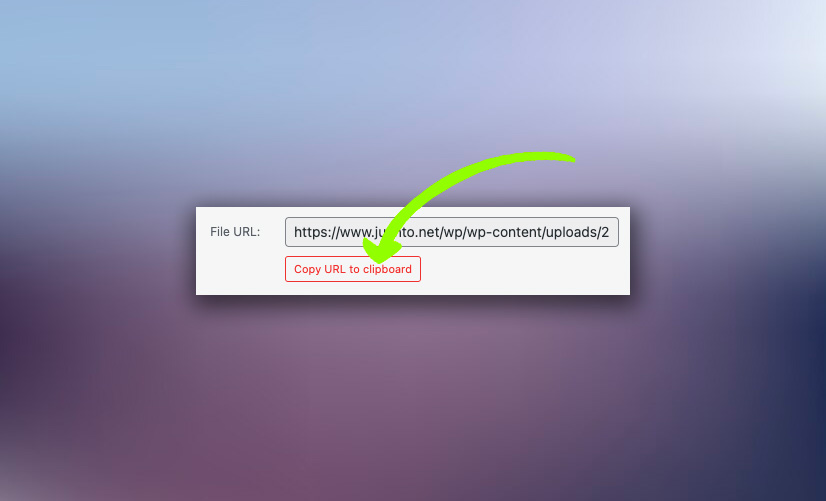
Begin by uploading the file to your WordPress dashboard. Navigate to Media > Add New, and once the upload is complete, click on the file to copy its URL.

Step 2: Edit the Button Link

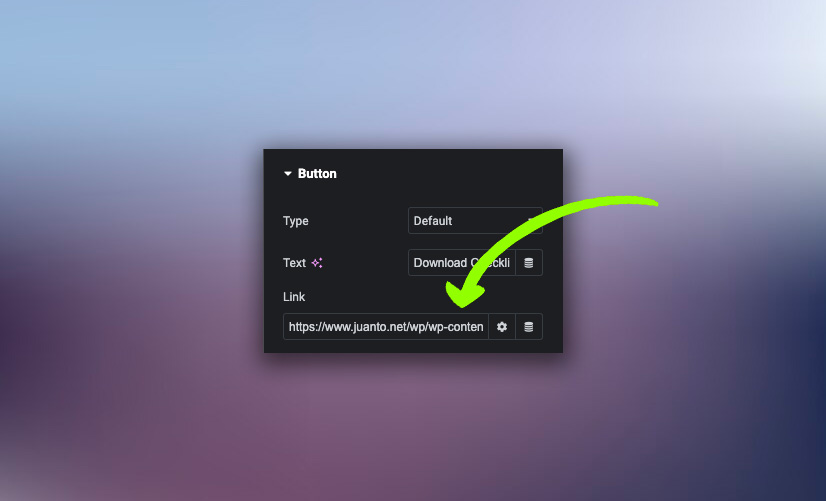
Now, paste your file URL into the button link field. However, if we were to end here, the file would still open in your browser. That's why we need to proceed by adding a custom attribute to enforce the download.

Step 3: Add a Custom Attribute

Select your button widget, then navigate to "Link Options." Ensure that you include the following custom attribute:

download|true

that translates to the HTML version that would be this:

download="true"


Save your changes, and you're all set!

February 25, 2024 - No Comments!

How can I stop Elementor popups from reopening after a user submits a form on my website?

Popup forms are like the Swiss Army knife of online engagement – versatile, powerful, and oh-so-useful. But let's face it – nothing kills the mood quite like a popup that just won't take a hint. You've filled out the form, you've clicked the close button – and yet, it keeps coming back for more. Frustrating, right?

Well, fear not, because I've got your back. In this tutorial, I'm going to show you how to put an end to the madness and ensure those pesky Elementor popups stay gone for good. From preventing them from reopening after form submissions to thwarting their comeback attempts after a close click, we'll cover all the bases. So buckle up, because we're about to transform your website into a popup-free paradise where user experience reigns supreme. Let's dive in and reclaim control of your Elementor popups!

But for now, let's dive into this quick tutorial together. Oh, and just a heads up – I assume you've already got your popup designed and ready to roll. If not, don't worry – we'll get there! Ready to banish those annoying popups for good? Let's get started!

Step 1: Design Your Elementor Popup

Elementor Popup - Juan Perez - Sweet Media Digital Agency

This is the popup I've designed. What I want to achieve is that when a user decides to submit their email to subscribe to the newsletter and receive their discount code via email, or if they choose to opt-out of receiving the discount code by clicking on the link under the form that says 'No, I will pay full price!', the popup should not reopen when they continue navigating or using our website.

Step 2: Select Form and Choose popup on the "Actions After Submit" options

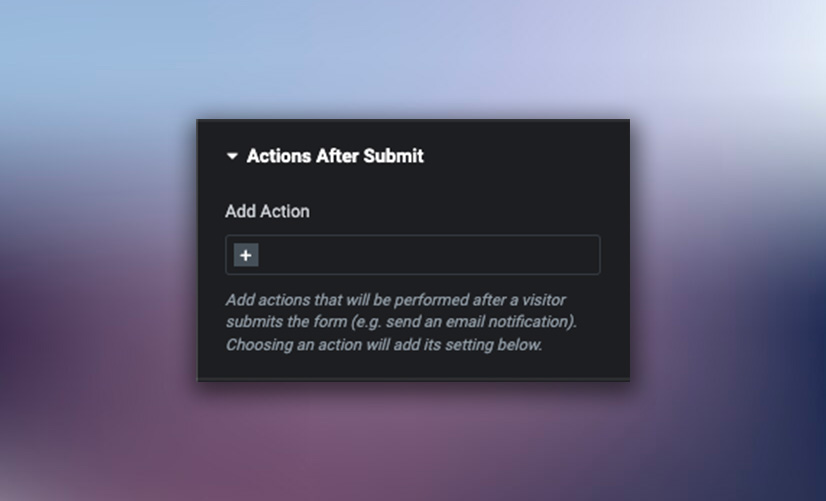
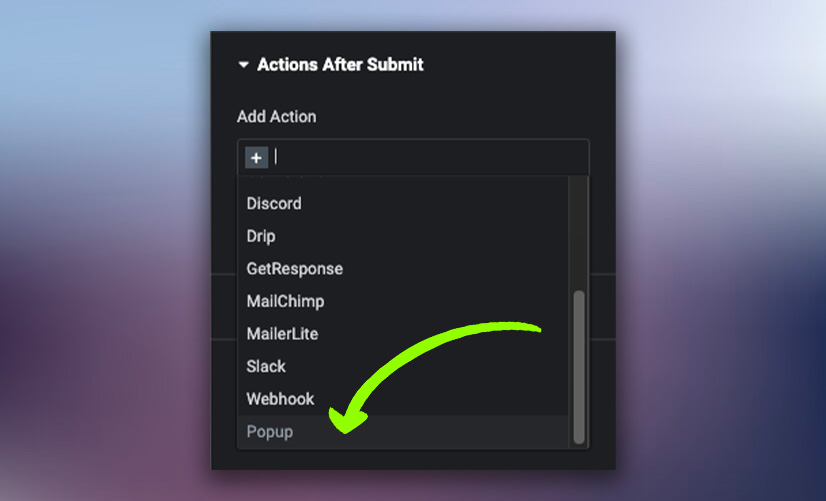
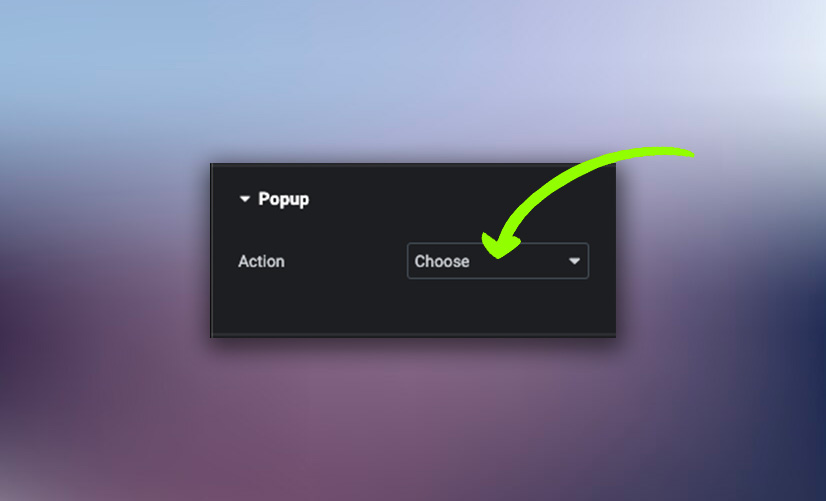
Now, locate the form within your popup. On the Elementor left sidebar, where all the settings are located, navigate to "Actions After Submit." From the list of options, choose "Popup" and add it to your selection.

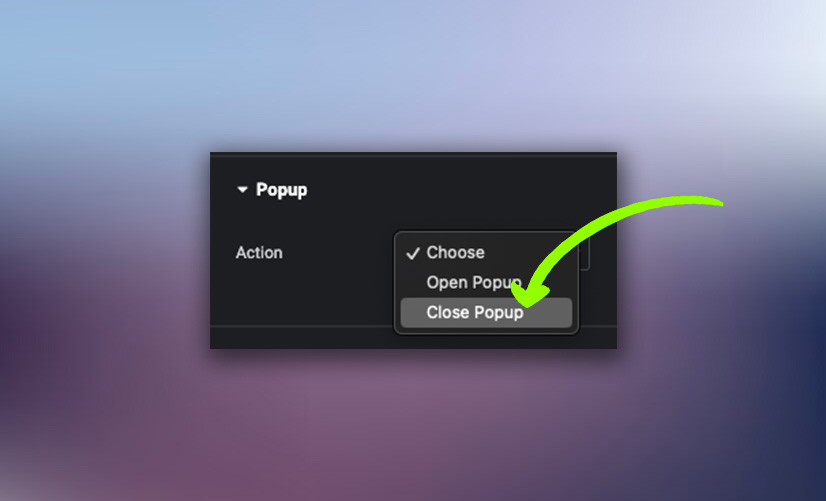
Step 3: After choosing "Popup" the Popup options will appear in the sidebar under "Actions After Submit"

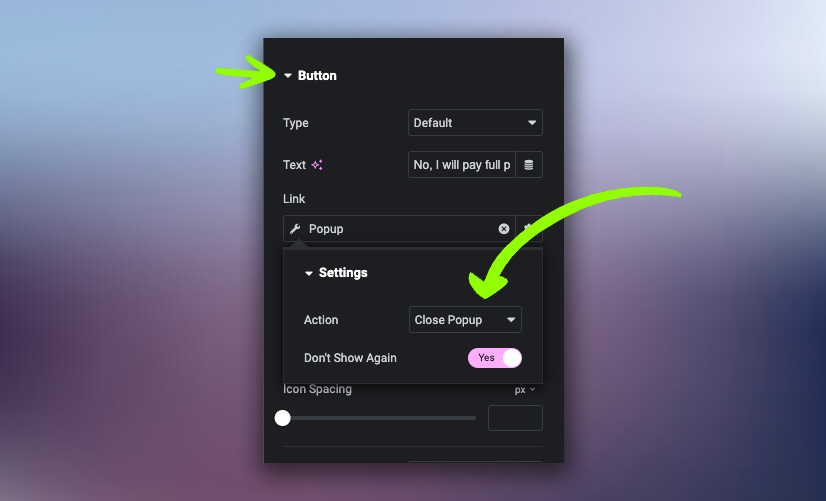
After selecting "Popup," you'll notice that the "Popup" options appear in the sidebar under "Actions After Submit." Within the Popup "Action," simply choose "Close Popup."

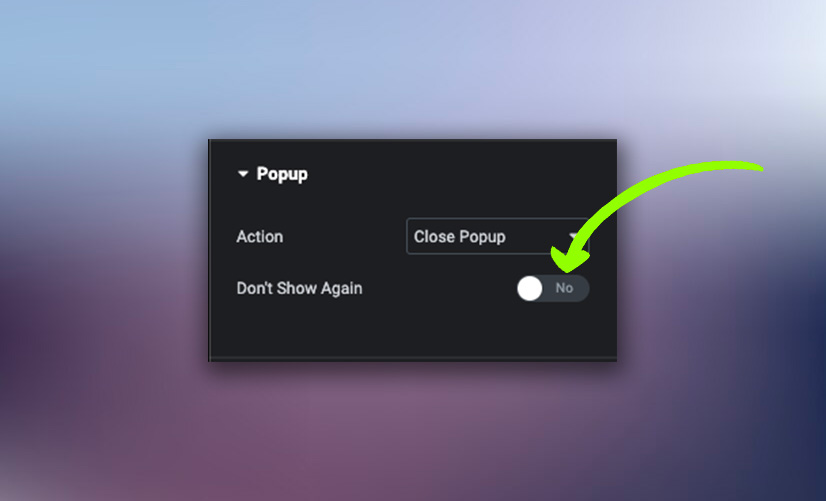
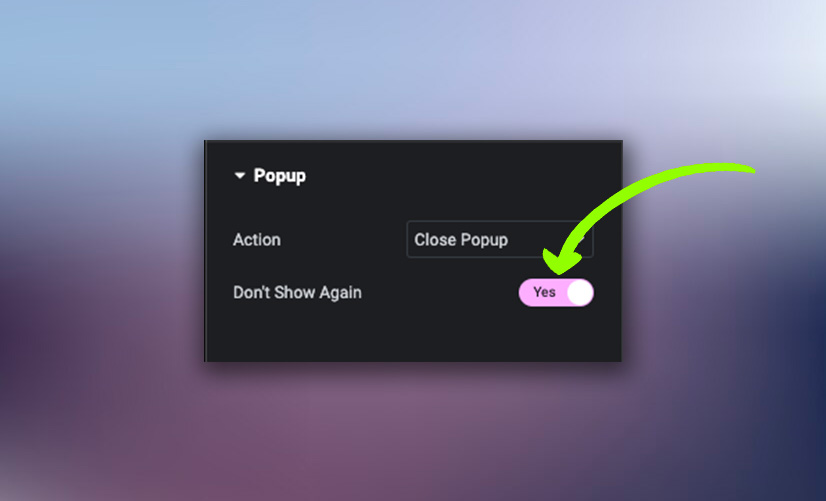
Step 4: Once you've selected the "Close Popup" action, a toggle switch labeled "Don't Show Again" will appear.

Be sure to toggle it to "Yes" to ensure the popup doesn't reappear.

And there you have it! We're all set. Once the user submits their information on the form, the popup will no longer reappear as it did before.

But hold on, what about the link under the form, you might be wondering? Well, that link actually a button, and you can follow the same steps using the Dynamic Tags! Let me show you how.

In conclusion, by following the simple steps outlined in this tutorial, you've successfully mastered the art of preventing Elementor popups from reappearing after form submissions or link clicks.

You've taken control of your website's user experience, ensuring a seamless and frustration-free interaction for your visitors. Remember, continuous learning and improvement are key in the ever-evolving world of web design and digital marketing.

Stay curious, stay creative, and keep exploring new ways to enhance your online presence. If you found this tutorial helpful, be sure to share it with others who might benefit from it. And don't forget to subscribe for more insightful tutorials and tips. Until next time, happy designing!

February 25, 2024 - No Comments!

My Curious Corner: A Journey of Discovery and Learning

Hello All,

Welcome to my very first blog post! I'm Juan Perez, a curious demon with an insatiable thirst for knowledge and a penchant for exploring anything that catches my eye. Whether it's learning a new skill, delving into a fascinating topic, or embarking on exciting projects, I'm always eager to dive in headfirst.

So, what can you expect from this blog? Think of it as my personal playground where I'll be sharing my experiences, triumphs, and even the occasional stumble with you. Consider it a journey where we'll navigate through the realms of technology, design, and digital marketing together, experiencing the highs and lows side by side.

About Me

I hail from the sunny streets of Santiago, Dominican Republic, but my journey led me to the bustling city of New York in 2005 (at least, I think so – time flies when you're having fun!). There, I pursued my passion for creativity and studied Graphic Design and Interactive Media. Now, I call Rockville, Maryland, my home base.

My Interest

Photography, architecture, technology, design – these are just a few of the things that fuel my curiosity and drive my passions. I find joy in problem-solving and thrive on the excitement of tackling new challenges.

Sweet Media Digital Agency

As the founder of Sweet Media Digital Agency, I've had the privilege of working with clients to bring their digital dreams to life. From web design to digital marketing strategies, I'm dedicated to helping businesses thrive in the online world.

What To Expect

In this blog, you can look forward to tutorials, technology insights, intriguing discoveries, and tips on web design and digital marketing. Whether you're a fellow enthusiast or simply curious about the world of creativity and technology, there's something here for everyone.

Lets Connect

I invite you to join me on this journey of exploration and growth. Feel free to share your thoughts, questions, and insights – after all, learning is always more fun when it's a collaborative effort.

Thank you for embarking on this adventure with me. Here's to endless curiosity and boundless possibilities!

Warm regards,

Juan Perez